
Aruba ED Card hidden fees are extra charges of $35 to $90 or more added by third-party agencies for unnecessary “processing” or “service.” The only mandatory cost is a $20 Sustainability Fee per person, paid at edcardaruba.aw. Apply directly and verify the total is exactly $20 to avoid overpaying.
What the Aruba ED Card Actually Costs in 2026
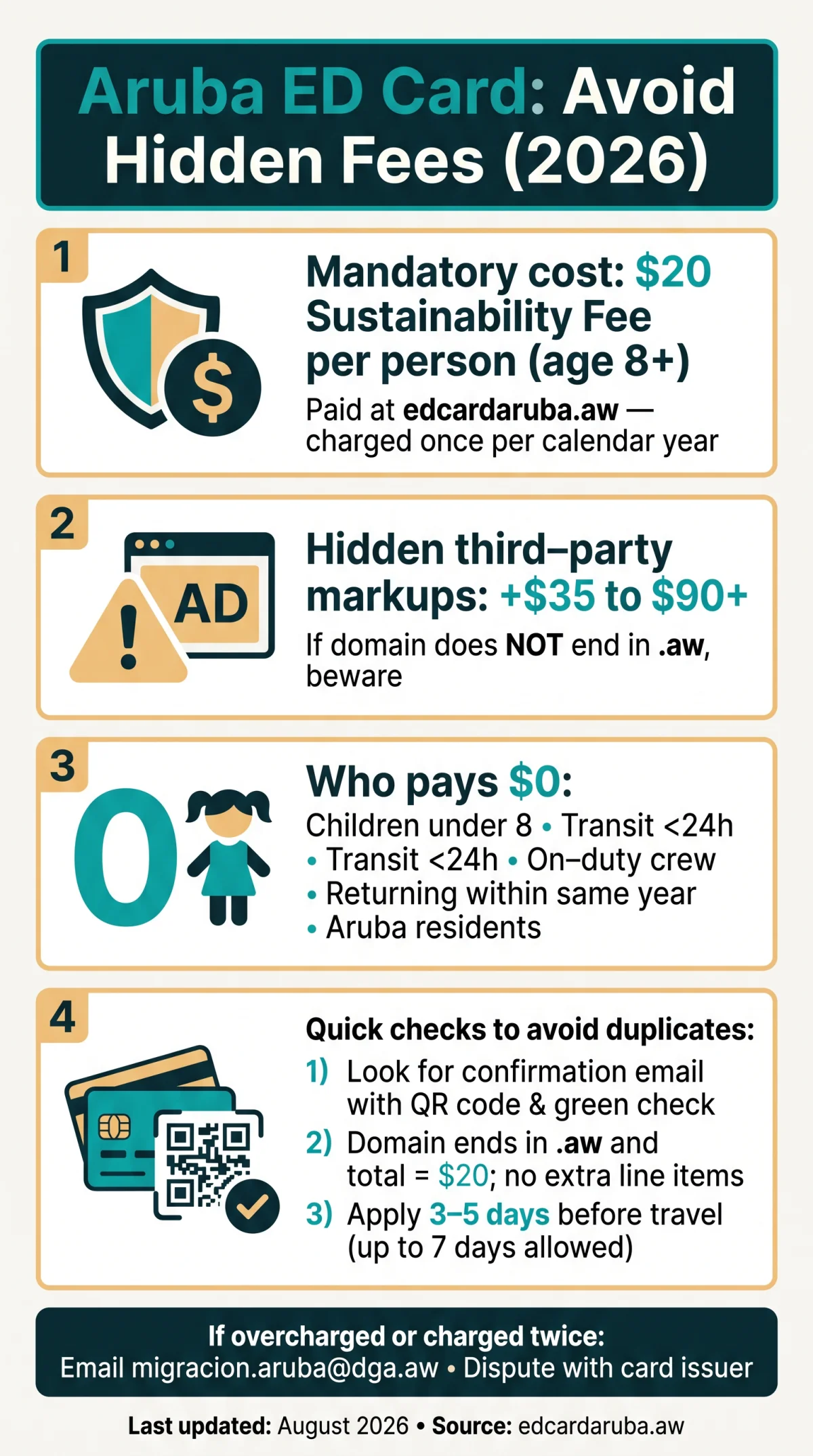
The only mandatory Aruba ED Card cost is a $20 Sustainability Fee per person aged 8 and older, paid at edcardaruba.aw. The digital embarkation/disembarkation card form is free ($0); the $20 fee (since July 2024) funds environmental preservation and beach maintenance. For a full breakdown of Aruba ED Card costs, apply directly at edcardaruba.aw to bypass Aruba ED Card hidden fees from intermediary sites.
The $20 fee is charged once per calendar year. Multiple Aruba trips within the same year incur only one charge — see our guide on how the $20 fee works per calendar year for details. US citizens are visa-exempt for up to 90 days but must still complete the Aruba ED Card; check the ED Card requirements for US citizens for full passport rules. Five groups pay $0:
- Children under age 8
- Transit passengers staying under 24 hours
- On-duty crew members
- Travelers returning within one calendar year
- Aruba residents
If you fall into one of these categories, you owe nothing. Any site charging you a fee is adding unnecessary cost.
Hidden Third-Party Agency Fees: How to Spot and Avoid Them
Third-party Aruba ED Card agencies add $35 to $90+ in hidden fees on top of the mandatory $20 Sustainability Fee. These sites exist to generate affiliate commissions, harvest traveler data, and sell leads.
| Source | Total Cost | Domain |
|---|---|---|
| edcardaruba.aw | $20 | .aw |
| Third-party sites | $55 to $110 | .com / .net / .org |
Red flags of a third-party markup:
- Domain ends in .com, .net, or .org instead of .aw
- Line items labeled “processing fee” or “extra service charge”
- PayPal, wire transfer, or cash accepted (the Aruba ED Card portal takes only Visa, Mastercard, Discover)
- Paid search ads marked “Ad” appear above organic results
- Bundled upsells: travel insurance, “priority processing,” “VIP support”
How Scam Sites Use Paid Ads to Lure Travelers
Third-party scam websites use paid Google and Bing ads to appear above organic results for “Aruba ED Card” queries. Look for the “Ad” label. The official portal at edcardaruba.aw does not run paid search ads. If the first result is labeled “Ad,” it is likely a paid intermediary charging hidden fees. Learn how to spot an Aruba ED Card fake site and protect yourself before entering any personal information.
Why Sharing Your Passport Data with Unverified Sites Is Risky
Sharing your passport number, flight itinerary, and credit card details with unverified third-party websites risks identity theft and data resale to affiliate partners. Use only edcardaruba.aw and never share passport scans with unknown sites.
How to Avoid Duplicate Charges on Your Aruba ED Card
Three scenarios cause double payments on the Aruba ED Card: paying both a third-party site and edcardaruba.aw, browser errors triggering a second $20 Sustainability Fee, or family members each paying individually when one application can list everyone.
Decision tree:
- Have you already applied?
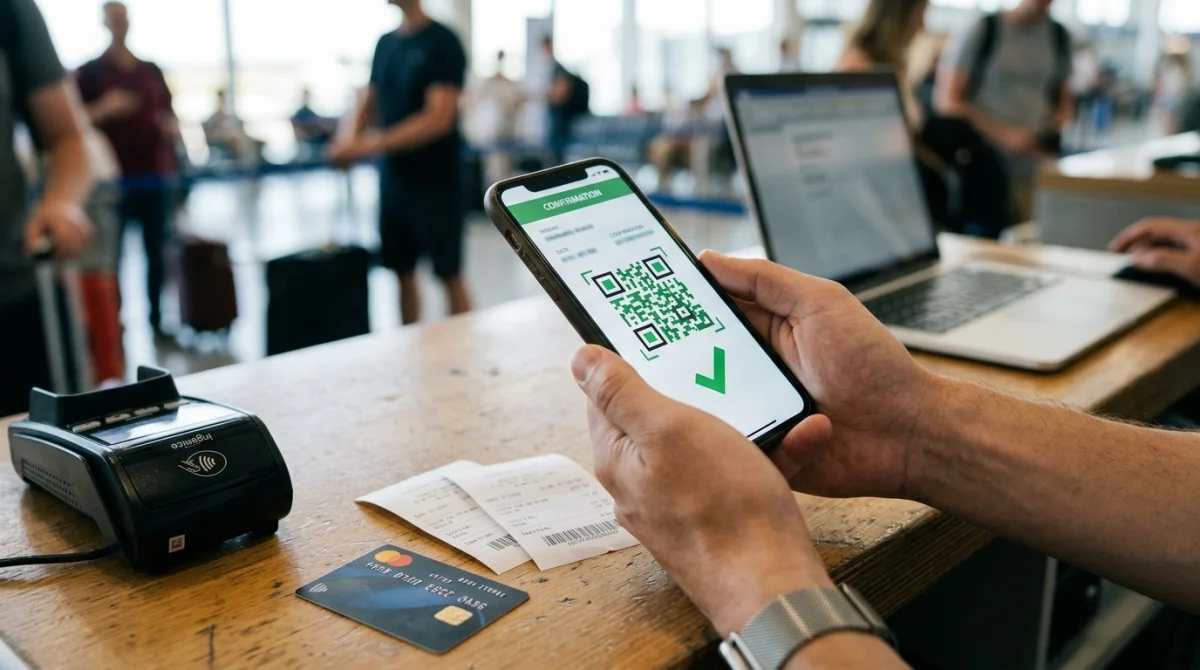
- If Yes: Check your email for a confirmation with a QR code and green checkmark.
- If No: Apply at edcardaruba.aw.
The $20 fee is charged once per calendar year. If you visit Aruba multiple times in the same year, only your first trip incurs the charge. You can submit up to 7 days before departure; for guidance on when to apply for your Aruba ED Card, applying 3 to 5 days ahead avoids last-minute panic that drives travelers toward third-party agencies. Before clicking pay, confirm the domain ends in .aw, the total is exactly $20, and no extra line items appear.
How to Check If Your ED Card Was Already Filed
To verify whether a travel agent, family member, or third-party site already submitted your Aruba ED Card, check your email for a confirmation containing a QR code and green checkmark from the official portal. Legitimate confirmations come from the edcardaruba.aw system. Generic branding, no QR code, or a third-party email address indicates a scam website submission. Do not submit a second form if one already exists.
What to Do If You’ve Been Overcharged or Charged Twice
Overcharged travelers should contact DIMAS at [email protected] for refunds and file a credit card chargeback for unauthorized third-party fees tied to the Aruba ED Card.
Email DIMAS
Request a refund for duplicate charges on the government portal at [email protected].
Contact your card issuer
Dispute unauthorized third-party fees. Chargeback rights apply to Visa, Mastercard, and Discover.
Apply at edcardaruba.aw
If you used a scam website, apply if not already filed, report the site to DIMAS, and monitor your credit report for identity theft.
Dispute email template: State the charge amount, transaction date, merchant name, and reason for dispute (e.g., “Unauthorized third-party markup on a $20 government fee”).
What to Do If You Applied Through a Scam Website
Apply on edcardaruba.aw
Immediately submit your ED Card if not already filed.
Dispute the charge
Contact your credit card company to dispute the scam charge.
Report to DIMAS
Report the scam site to Aruba DIMAS at [email protected].
Monitor your credit
Monitor your credit report for identity theft.
FAQ: Aruba ED Card Fees, Hidden Charges, and Refunds
Does Aruba charge for an ED card?
The Aruba ED Card form is free ($0). The only mandatory charge is the $20 USD Sustainability Fee per person aged 8 and older, introduced in July 2024 on the government portal at edcardaruba.aw. Third-party sites may add extra fees on top, which are not required.
What are the hidden fees for the Aruba ED Card?
Aruba ED Card hidden fees are extra charges, typically $35 to $90 or more, added by third-party agencies for “processing,” “service,” or “expedited” handling. These are not required. The government portal at edcardaruba.aw charges only the $20 Sustainability Fee per person with no additional markups.
How do I know if I paid a hidden fee on my Aruba ED Card?
Check your credit card statement. A legitimate Aruba ED Card charge should be exactly $20. If you see a higher amount or multiple charges, you likely paid a third-party markup or a duplicate fee. Cross-reference the charge with your confirmation email from edcardaruba.aw, which includes a QR code and green checkmark.
Can I get a refund if I was charged twice for my Aruba ED Card?
Yes. Contact [email protected] for official duplicate charges; file a chargeback for third-party fees with your credit card issuer under Visa, Mastercard, or Discover consumer protection policies.
What happens if I don’t complete the ED Card before traveling to Aruba?
You may be denied boarding at check-in or face delays at immigration. You must present a confirmation email with a QR code and green checkmark at airline check-in, the boarding gate, and immigration upon arrival in Aruba.
When should I submit my Aruba ED Card?
You can submit up to 7 days before departure. The recommended window is 3 to 5 days, ideally 72 hours, before your flight.
What payment methods does the Aruba ED Card accept?
Visa, Mastercard, and Discover only, including both credit and debit cards. If a site offers PayPal, wire transfer, or cash payment, it is not the government portal at edcardaruba.aw and likely adds hidden fees on top of the $20 Sustainability Fee. For a complete list of accepted payment methods for the Aruba ED Card, refer to our dedicated guide.
Is it safe to let a travel agent fill out my ED Card?
A designated representative may submit the form on your behalf, but commercial agencies are unnecessary and often charge $35 to $90 or more in hidden fees. The Aruba ED Card form takes approximately 10 to 15 minutes to complete yourself at edcardaruba.aw with no extra service charge.
Last updated: August 2026. Source: Aruba Department of Immigration, edcardaruba.aw. This guide is independently researched and not affiliated with the Aruba government.